
Concrete pavements form the backbone of modern transportation and infrastructure systems. They are widely used for highways, industrial floors, airports, and city roads due to their strength, durability, and long-term cost efficiency. When properly designed and maintained, these pavements can last for decades, providing a stable, smooth surface that supports heavy traffic and minimizes repair costs. The growing use of sustainable materials and modern engineering practices has made concrete pavement design an essential focus for engineers, contractors, and developers. High-quality concrete Wodonga services exemplify the importance of expert design, proper construction, and regular maintenance in achieving reliable and long-lasting results.
The Fundamentals of Concrete Pavement Design
The design of concrete pavements involves the careful consideration of various structural, material, and environmental factors. A well-designed pavement must withstand traffic loads, temperature variations, and subgrade conditions without excessive deformation or cracking. Engineers typically base their designs on the following key elements:
- Traffic Loading: Pavement design begins by estimating the number and type of vehicles that will use the surface throughout its service life. This is commonly expressed as Equivalent Single Axle Loads (ESALs), which help determine the required pavement thickness.
- Subgrade Support: The strength and stability of the soil beneath the pavement influence how loads are distributed. Engineers assess the subgrade using the California Bearing Ratio (CBR) or the modulus of subgrade reaction (k-value).
- Concrete Properties: The mix design must achieve adequate compressive and flexural strength, workability, and durability. The water-cement ratio, aggregate type, and curing method all play crucial roles in determining performance.
- Environmental Conditions: Temperature changes, moisture levels, and freeze-thaw cycles can cause expansion and contraction, as well as surface wear. The pavement must be designed to accommodate these stresses.
Types of Concrete Pavement Systems
There are several types of concrete pavement systems, each suited to different applications and performance needs:
- Jointed Plain Concrete Pavement (JPCP): The most common type, using regularly spaced joints to control cracking.
- Jointed Reinforced Concrete Pavement (JRCP): Includes reinforcing steel to reduce joint spacing and minimize crack width.
- Continuously Reinforced Concrete Pavement (CRCP): Contains continuous steel reinforcement and no contraction joints, ideal for high-traffic areas.
- Precast Concrete Pavement: Prefabricated slabs are manufactured off-site and installed quickly, reducing downtime for repairs or construction.
Each system offers distinct advantages depending on expected loads, maintenance requirements, and environmental factors.
Construction Practices for Long-Lasting Pavements
Even the best design will fail if construction practices are poor. The construction phase involves several critical steps:
- Subgrade Preparation: The foundation must be well-compacted and free from organic material. Weak areas should be stabilized with granular material or lime.
- Formwork and Reinforcement: Accurate placement of forms and reinforcement ensures structural integrity.
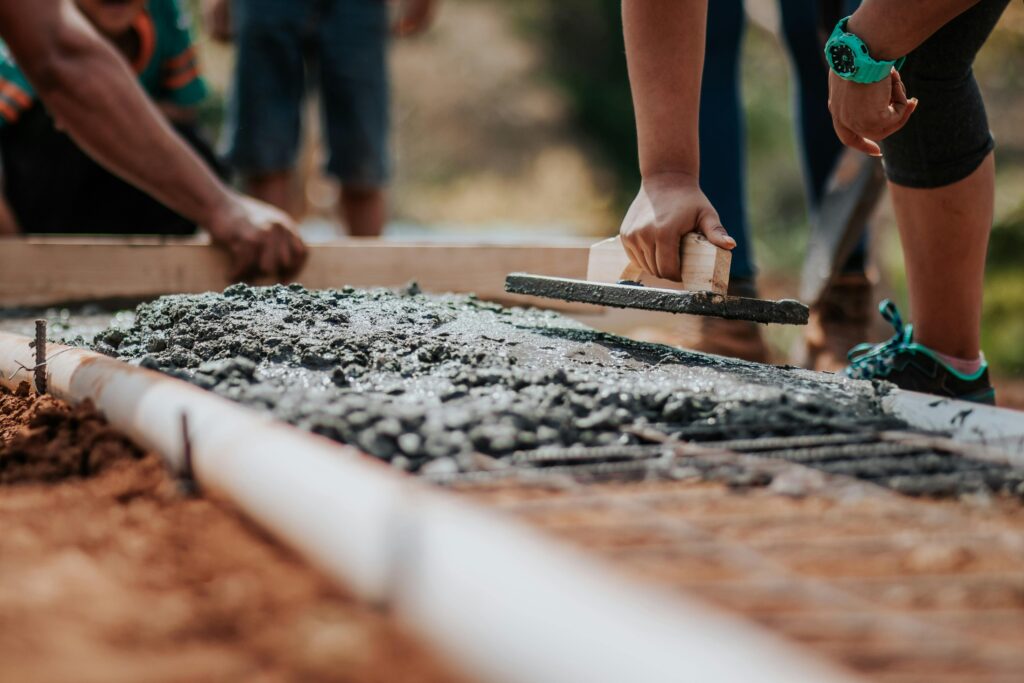
- Concrete Placement and Finishing: Concrete should be mixed and poured consistently, followed by proper finishing techniques, such as troweling, texturing, or brooming, to improve skid resistance.
- Curing: Maintains adequate moisture and temperature conditions for concrete to achieve its intended strength. Improper curing can lead to early-age cracking and surface scaling.
Maintenance and Rehabilitation Strategies
Proper maintenance extends pavement life and reduces the need for costly reconstruction. Common maintenance and rehabilitation practices include:
- Joint Sealing: Prevents water and debris from entering joints and damaging the subbase.
- Crack Repair: Timely filling of cracks using sealants or epoxy prevents further deterioration.
- Grinding and Resurfacing: Diamond grinding restores smoothness and skid resistance without major reconstruction.
- Slab Replacement: Damaged panels can be replaced individually using precast or cast-in-place methods.
- Preventive Maintenance: Routine inspections, cleaning, and sealing are vital for long-term performance.
Professional maintenance services, such as those provided by experienced concrete Wodonga contractors, ensure that pavements remain functional, safe, and visually appealing throughout their service life.
Sustainability and Innovations in Concrete Pavements
Modern pavement design incorporates sustainability to reduce environmental impact. The use of supplementary cementitious materials such as fly ash, slag, or silica fume reduces cement consumption and lowers carbon emissions. Additionally, recycled aggregates and permeable concrete mixes promote resource conservation and water management. Emerging technologies like self-healing concrete, fiber reinforcement, and smart sensors further enhance durability and performance monitoring.
Conclusion
Concrete pavements represent a balance between engineering precision, material science, and environmental responsibility. Through thoughtful design, meticulous construction, and proactive maintenance, concrete pavements can provide service lives exceeding 30 years with minimal intervention. As construction practices continue to evolve, integrating advanced materials and digital monitoring tools will further improve performance and sustainability. The result is a more resilient, efficient, and long-lasting infrastructure network; one built on the enduring strength of concrete.